Holistic Progress Card (HPC) NEP 2020 – Complete Guide for Schools 2026
For decades, report cards/ Achievement Records in Indian schools meant one thing — marks.
But the National Education Policy 2020 (NEP 2020) has changed that.
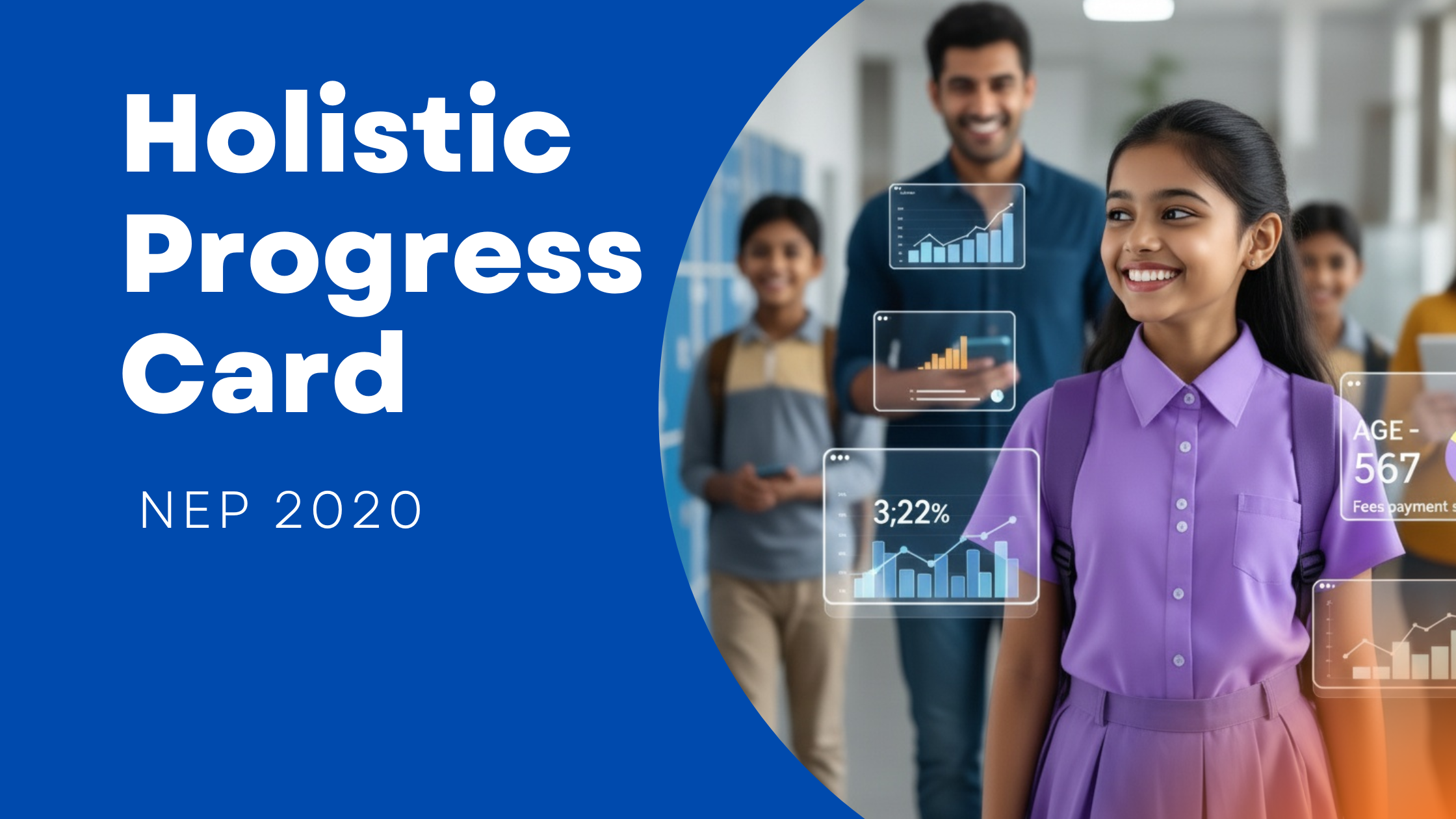
It introduced the concept of the Holistic Progress Card (HPC) — a 360-degree, learner-centric report card designed to reflect not just academic marks, but the overall development of a child.
If you are a school leader, principal, or academic coordinator, this guide will help you understand:
-
What is Holistic Progress Card?
-
Why it was introduced?
-
What should it include?
-
How it differs across Foundational, Preparatory, Middle, and Secondary stages?
-
How schools can implement it practically?
-
How to digitize and customize HPC easily?
-
Try HPC Builder for free
Why Traditional Report Cards Needed Change
Earlier report cards were:
-
Marks-focused
-
Exam-heavy
-
Comparison-based
-
Stress-driven
NEP 2020 clearly states in Para 4.35 that assessment must shift towards a multidimensional 360-degree progress card.
The goal?
- Move away from rote memorization
- Reduce exam pressure
- Promote self-awareness
- Focus on competencies, not just marks
This vision is also supported by CBSE and PARAKH (Performance Assessment, Review, and Analysis of Knowledge for Holistic Development).
What is Holistic Progress Card (HPC)?
The Holistic Progress Card is:
-
Learner-centric
-
Competency-based
-
Inclusive
-
Multidimensional
-
360-degree feedback system
It includes:
-
Teacher assessment
-
Self-assessment
-
Peer assessment
-
Skills & competency tracking
-
Social-emotional development
-
Physical and well-being indicators
It reflects growth over time, not a single exam score.
Structure of Holistic Progress Card as per NEP 2020
NEP introduced the 5+3+3+4 academic structure:
| Stage | Grades | Age | Focus |
|---|---|---|---|
| Foundational | Pre-school + Grade 1–2 | 3–8 | Play-based, activity-based |
| Preparatory | Grade 3–5 | 8–11 | Experiential learning |
| Middle | Grade 6–8 | 11–14 | Subject-oriented |
| Secondary | Grade 9–12 | 14–18 | Critical thinking, flexibility |
Let’s understand how HPC differs across each stage.
Holistic Progress Card – Foundational Stage (Pre-Nursery to Grade 2)
Focus: Play, curiosity, habits.
What should be included?
-
Language development
-
Numeracy readiness
-
Motor skills
-
Social behavior
-
Emotional expression
-
Participation in activities
Assessment Style:
- Observation-based
- Descriptive feedback
- Developmental indicators
- No ranking
This stage must feel encouraging, not evaluative.
Holistic Progress Card – Preparatory Stage (Grade 3–5)
Focus: Experiential learning.
HPC Should Track:
-
Concept clarity
-
Reading & comprehension
-
Application of knowledge
-
Creativity
-
Teamwork
-
Communication skills
-
Environmental awareness
Here, numeric grading may begin but must be supported by qualitative feedback.
Holistic Progress Card – Middle Stage (Grade 6–8)
Focus: Subject understanding + competencies.
HPC Must Include:
-
Subject-wise conceptual understanding
-
Analytical ability
-
Problem-solving
-
Digital literacy
-
Research skills
-
Social & emotional growth
-
Participation in projects
Peer assessment becomes meaningful here.
Holistic Progress Card – Secondary Stage (Grade 9–12)
Focus: Depth, critical thinking, life readiness.
HPC Should Cover:
-
Core subject mastery
-
Application-based learning
-
Career orientation indicators
-
Life skills
-
Leadership qualities
-
Community engagement
-
Responsibility & ethics
Board exams continue, but HPC adds a broader perspective.
Key Features of a Proper Holistic Progress Card
A strong HPC must be:
✔ Participatory
✔ Inclusive
✔ Flexible
✔ Interdisciplinary
✔ Growth-oriented
✔ Competency-tracking
It should build self-esteem, not fear.
Components of a 360° Holistic Progress Card
A well-designed HPC includes:
1. Academic Performance
Concept clarity, understanding, application.
2. Skills & Competencies
-
Cognitive
-
Metacognitive
-
Social-emotional
-
Practical
3. Attitudes & Values
-
Respect
-
Responsibility
-
Environmental awareness
4. Well-being
-
Physical health
-
Participation in sports
-
Emotional stability
5. Self & Peer Reflection
Students reflect on:
-
What they did well
-
What they can improve
-
Goals for next term
Common Challenges Schools Face in Implementing HPC
-
Too much manual work
-
Teachers confused about rubrics
-
No standard format
-
Lack of digital tools
-
Difficulty in maintaining consistency
This is where ERP-based automation helps.
How Schools Can Implement Holistic Progress Card Easily
Instead of managing spreadsheets, schools can:
-
Define stage-wise templates
-
Create skill-based rubrics
-
Enable teacher, peer, self inputs
-
Auto-generate descriptive feedback
-
Maintain term-wise tracking
-
Share digital report cards
A proper ERP system can integrate HPC within academic modules.
Read also:
Complete NEP-aligned ERP Guide: HPC with School ERP
Digital Holistic Progress Card – Why It Matters
Manual HPC:
-
Time-consuming
-
Inconsistent
-
Hard to archive
Digital HPC:
✔ Standardized
✔ Editable
✔ Customizable per school
✔ Easy parent access
✔ Long-term tracking
✔ NEP-compliant
Sample Format of Holistic Progress Card
A well-designed HPC includes:
-
Student Profile
-
Academic Overview
-
Competency Matrix
-
Co-curricular Record
-
Teacher Feedback
-
Peer Reflection
-
Self-Reflection
-
Parent Remarks
-
Overall Growth Summary
Role of PARAKH in Assessment Reform
PARAKH is the national assessment centre set up to:
-
Standardize assessment norms
-
Guide school boards
-
Promote competency-based evaluation
-
Reduce rote-driven assessment
Schools aligning with HPC are future-ready.
Final Thoughts
Holistic Progress Card is not just a new report format.
It is a shift:
From marks → to growth
From comparison → to reflection
From pressure → to development
Schools that adopt HPC properly will not just comply with NEP 2020 — they will transform their learning culture.
Do you want a software that aligns with NEP 2020 and HPC . Contact MyLeading Campus® today . Contact us