Smart ERP for Schools, Colleges & Universities

What is School ERP Software? A Complete Guide for Principals & Trustees

What is School ERP Software? A Complete Guide for Principals & Trustees

Managing a school today is not limited to classrooms and examinations. Principals and trustees are responsible for everything from admissions, staff management, payroll, fee collection, to building parent trust. With increasing competition and higher expectations from parents, many schools in India are shifting towards School Management ERP software.

If you are a school leader wondering whether ERP school management software is right for your institution, this guide will help you understand what it is, why it matters, and how to choose the best school management software in India.

What is School ERP Software?

School ERP software (Enterprise Resource Planning) is a complete management system that integrates all school operations into one platform. Instead of relying on multiple manual registers and spreadsheets, ERP software automates tasks such as:

Why Do Schools in India Need ERP Software?

Schools are no longer just educational institutions; they are also service providers where trust, efficiency, and transparency matter. Parents want real-time updates, teachers need simplified tools, and principals require reliable reports.

Here’s why schools are adopting ERP systems:

  • Time savings: Reduce manual paperwork and avoid repetitive administrative work.
  • Transparency: Keep parents informed about attendance, fees, and academic progress through mobile apps.
  • Efficiency: Automate tasks like timetable scheduling, admissions, and payroll.
  • Data-driven decisions: Principals and trustees can access insightful reports on school performance in real time.
  • Security: Protect sensitive student and staff data with role-based access.

Benefits for Principals and Trustees

For school leaders, ERP software is not just a tool, but a strategic asset. It allows them to:

  • Get a 360° view of school operations in real time.
  • Identify fee defaulters instantly and send reminders via SMS, email, or WhatsApp.
  • Track teacher attendance and class performance.
  • Compare year-on-year academic and financial performance.
  • Strengthen the school’s brand by showing parents a transparent system.

Key Features of the Best School Management Software

A good ERP must cover all aspects of school administration. Some must-have modules include:

How to Choose the Best ERP School Management Software

Here’s a simple checklist for principals and trustees:

  1. Ease of use: Teachers, parents, and staff should be able to use it without heavy training.
  2. Mobile apps: Choose a system with dedicated apps for teachers, parents, and students.
  3. Scalability: The ERP should grow with your school’s requirements.
  4. Support: Look for dedicated support, like MyLeading Campus® offers.
  5. Affordability: Ensure it fits your school’s budget while delivering maximum value.

Challenges in ERP Adoption

While ERP software brings massive benefits, principals should be aware of common challenges:

  • Resistance to change: Some staff may find it hard to adapt.
  • Initial cost: Though affordable in the long run, setup costs may seem high.
  • Training: Teachers and admins may need time to learn the system.

However, with proper onboarding and support, these challenges are quickly resolved. Platforms like MyLeading Campus® provide training and support that make the transition smooth.

Conclusion

School ERP software is no longer a luxury — it is a necessity for schools that want to stay ahead. From admissions to exams, payroll to parent communication, everything becomes more efficient with ERP. For principals and trustees, it means better control, informed decisions, and stronger trust with parents.

If you’re looking for the best school management software in India, explore MyLeading Campus® — designed for Indian schools, highly customizable, and trusted by 100+ institutions.

FAQs

What is a School ERP Software?

It is an online system to manage daily school operations such as admissions, fees, attendance, and exams in one place.

How does it help principals and trustees?

It reduces manual work, provides real-time reports, improves communication, and helps in strategic decision-making.

Is School ERP Software secure?

Yes, most ERP systems are cloud-based with strong security like encryption, role-based access, and backups.

What features make it the best school management software?

Features like admission, fees, attendance, report cards, payroll, transport, and mobile apps for all users make it complete.

Why should schools in India adopt ERP school management software?

Because it saves time, cuts costs, reduces errors, and helps schools meet the growing expectations of parents and regulators.


What is APAAR ID? Complete Guide for Schools and colleges 2026
  • 2026-03-30
  • Admin

What is APAAR ID? Complete Guide for Schools and colleges 2026

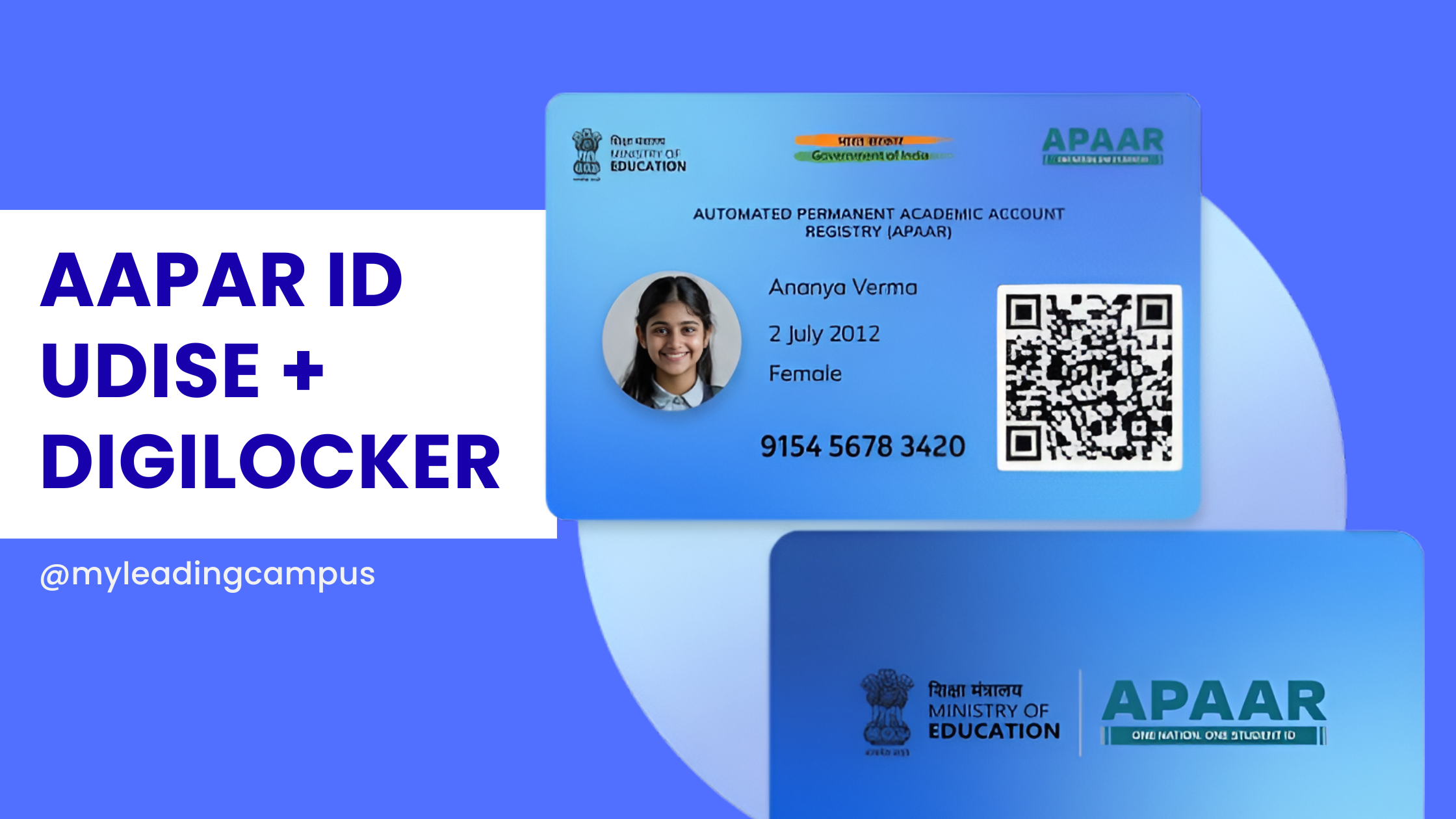
What is APAAR ID? The Real, No-Nonsense Guide for Schools in 2026 Let's be completely honest for a second: running a school right now is starting to feel a whole lot like running a government data entry center. I was chatting with a bunch of school owners recently at the School Summit in Chandigarh, and almost everyone was stressing over the exact same thing. The APAAR ID mandate. If you are a principal or an administrator navigating 2026, you already know the education department is pushing this hard. But what exactly is it, and how on earth are you supposed to manage it without your admin staff quitting out of sheer frustration? What is APAAR ID, Anyway? Think of it as an Aadhaar card, but strictly for academics. APAAR gives every single student a unique 12-digit lifelong ID number. This number ties directly into the Academic Bank of Credits (ABC). So, whether a kid switches to a new school in a different state, wins a recognized sports tournament, or eventually finishes 12th grade, all that data gets securely locked into their personal digital vault. It's actually a fantastic concept for the students, eliminating the need for physical mark sheets and transfer certificates. But for schools? It is a massive logistical headache. The Hidden Challenge: The UDISE Connection A lot of guides skip over how this actually works in practice. You can't just invent an APAAR ID. The system relies on a very specific chain of verified data: School Data → UDISE Verification → APAAR ID Generation → DigiLocker Storage If your UDISE records are outdated, or if a student's name in your register doesn't perfectly match their Aadhaar card, the whole chain breaks. The government portal simply kicks back an error. The Real Numbers: Manual vs. Automated Let's say you have a school with 1,000 students. If you try to manage the UDISE matching, parental consent, and APAAR generation manually by having staff type into government portals, you are looking at: 30–40% error rates due to data mismatches. Weeks of delays chasing down lost paper consent forms. Constant timeouts because the national portals get overwhelmed. This is exactly why we spent so much time building our APAAR ID software for schools. We wanted to flip those numbers. How MyLeading Campus Actually Fixes It Instead of wrestling with messy Excel sheets, our ERP is fully DigiLocker integrated and compatible. We actually set up a dedicated partner account with DigiLocker just to make sure this API connection is rock solid for our partner schools. We built a centralized dashboard just for school principals. You open it up in the morning, and right there you can see the big picture. You know exactly how many IDs are successfully generated, which classes still need parental consent, and which specific Aadhaar/UDISE names are throwing errors so your team can fix them fast. The software handles the hardest part: the parents. It pushes digital consent requests straight to the parents' smartphones. Once they approve it with a quick OTP, you just select the class and click a button to generate the IDs in bulk. No more typing things one by one. Want to implement APAAR without the stress? Stop paying your staff to do manual data entry. Book a free demo today and I will personally walk you through the exact workflow of our school ERP to show you how easy compliance can be. Quick FAQs 1. Is the APAAR ID actually mandatory for my school? Yes. The Ministry of Education requires it for tracking academic progress and managing the ABC. It is becoming the backbone of student identity in India. 2. Can we generate the ID without UDISE data? No. The government requires verified UDISE data as the foundation before an APAAR ID can be legally generated. 3. What is the role of DigiLocker here? DigiLocker is the actual vault. While APAAR is the ID number, DigiLocker is where the mark sheets and certificates are securely stored and verified. 4. Do we have to use the government website directly? You can, but it is painfully slow for bulk entries. Using a DigiLocker-integrated partner system like MyLeading Campus bypasses the manual data entry and lets you do everything from one screen.
Holistic Progress Report Card (NEP 2020): Format, Examples, Challenges & How Schools Can Actually Implement It: Guide for Schools 2026
  • 2026-03-23
  • Admin

Holistic Progress Report Card (NEP 2020): Format, Examples, Challenges & How Schools Can Actually Implement It: Guide for Schools 2026

Holistic Progress Report Card (NEP 2020): Format, Examples & Implementation Guide 2026 If you're a school leader or administrator, you've likely heard about the Holistic Progress Report Card (HPC) under NEP 2020. On paper, it sounds simple — focus on skills, not just marks. But in reality, most schools are struggling with implementation. This guide focuses on one thing: how to actually implement HPC without increasing workload. --- What is a Holistic Progress Report Card? A Holistic Progress Report Card (HPC) is a system introduced under NEP 2020 to evaluate a student’s complete development. Academic performance Skill-based learning Behavioral traits Social and emotional growth Unlike traditional report cards, HPC focuses on continuous development, not just exam results. Traditional vs Holistic Report Card Aspect Traditional Holistic Focus Marks Overall Development Evaluation Exam-based Continuous Skills Tracking No Yes Feedback Limited Detailed --- Why Schools Are Struggling No standard format available Too many evaluation parameters High time consumption Teacher resistance due to workload Lack of proper tools Understanding HPC is easy. Implementing it manually is the real challenge. --- Holistic Progress Report Card Format A practical HPC should include: Student Information Academic Evaluation Skill Assessment Co-curricular Activities Behavioral Observations Teacher Remarks 👉 Explore a complete ready-to-use structure here: Holistic Progress Card Full Solution --- Real Challenge: Time Creating one report manually takes ~20 minutes. For 1000 students = 300+ hours of work. This is why schools are moving toward automation. --- Try Live HPC Builder Instead of imagining, try generating a real report: 👉 Try Free Live HPC Builder --- How Schools Are Solving This Manual Method Excel sheets Word templates Copy-paste remarks Result: Errors, delays, frustration Automated Method Pre-built formats Auto remarks One-click generation Result: Speed, accuracy, consistency --- Benefits of Holistic Progress Cards Better student insights Improved parent communication Reduced teacher workload Future-ready system --- Explore Detailed Guide For a deeper understanding, read our complete guide: 👉 Complete HPC Guide for Schools 2026 --- FAQs (Highly Important) 1. What is a Holistic Progress Report Card? It is a NEP 2020-based report system that evaluates academic, behavioral, and skill-based development of students instead of just marks. 2. Is HPC mandatory for schools? While full implementation is evolving, schools are expected to align with NEP 2020 guidelines, making HPC increasingly essential. 3. How can schools create HPC easily? Manual creation is time-consuming. Schools are adopting automated systems to generate reports quickly and accurately. 4. What is included in an HPC? It includes academics, skills, co-curricular activities, behavior, and teacher remarks. 5. How much time does it take to generate one report? Manually: 15–30 minutesAutomated: Less than 2 minutes 6. Can HPC be customized? Yes, formats can be customized based on school or board requirements. 7. Why is HPC important? It provides a complete picture of a student's growth, helping teachers and parents make better decisions. 8. Is there any software for HPC? Yes, modern ERP systems now offer automated HPC generation aligned with NEP 2020. --- Final Thought HPC is not just a new format. It’s a shift in how education evaluates students. The real question is: Do you want teachers spending hours creating reports… or minutes generating them? 👉 Try Live Builder👉 Explore Full Solution
Holistic Progress Card (HPC) NEP 2020 – Complete Guide for Schools 2026
  • 2026-02-22
  • Admin

Holistic Progress Card (HPC) NEP 2020 – Complete Guide for Schools 2026

For decades, report cards/ Achievement Records in Indian schools meant one thing — marks. But the National Education Policy 2020 (NEP 2020) has changed that. It introduced the concept of the Holistic Progress Card (HPC) — a 360-degree, learner-centric report card designed to reflect not just academic marks, but the overall development of a child. If you are a school leader, principal, or academic coordinator, this guide will help you understand: What is Holistic Progress Card? Why it was introduced? What should it include? How it differs across Foundational, Preparatory, Middle, and Secondary stages? How schools can implement it practically? How to digitize and customize HPC easily? Why Traditional Report Cards Needed Change Earlier report cards were: Marks-focused Exam-heavy Comparison-based Stress-driven NEP 2020 clearly states in Para 4.35 that assessment must shift towards a multidimensional 360-degree progress card. The goal? Move away from rote memorization Reduce exam pressure Promote self-awareness Focus on competencies, not just marks This vision is also supported by CBSE and PARAKH (Performance Assessment, Review, and Analysis of Knowledge for Holistic Development). What is Holistic Progress Card (HPC)? The Holistic Progress Card is: Learner-centric Competency-based Inclusive Multidimensional 360-degree feedback system It includes: Teacher assessment Self-assessment Peer assessment Skills & competency tracking Social-emotional development Physical and well-being indicators It reflects growth over time, not a single exam score. Structure of Holistic Progress Card as per NEP 2020 NEP introduced the 5+3+3+4 academic structure: Foundational Pre-school + Grade 1–2 3–8 Play-based, activity-based Preparatory Grade 3–5 8–11 Experiential learning Middle Grade 6–8 11–14 Subject-oriented Secondary Grade 9–12 14–18 Critical thinking, flexibility Let’s understand how HPC differs across each stage. Holistic Progress Card – Foundational Stage (Pre-Nursery to Grade 2) Focus: Play, curiosity, habits. What should be included? Language development Numeracy readiness Motor skills Social behavior Emotional expression Participation in activities Assessment Style: Observation-based Descriptive feedback Developmental indicators No ranking  This stage must feel encouraging, not evaluative. Holistic Progress Card – Preparatory Stage (Grade 3–5) Focus: Experiential learning. HPC Should Track: Concept clarity Reading & comprehension Application of knowledge Creativity Teamwork Communication skills Environmental awareness Here, numeric grading may begin but must be supported by qualitative feedback. Holistic Progress Card – Middle Stage (Grade 6–8) Focus: Subject understanding + competencies. HPC Must Include: Subject-wise conceptual understanding Analytical ability Problem-solving Digital literacy Research skills Social & emotional growth Participation in projects Peer assessment becomes meaningful here. Holistic Progress Card – Secondary Stage (Grade 9–12) Focus: Depth, critical thinking, life readiness. HPC Should Cover: Core subject mastery Application-based learning Career orientation indicators Life skills Leadership qualities Community engagement Responsibility & ethics Board exams continue, but HPC adds a broader perspective. Key Features of a Proper Holistic Progress Card A strong HPC must be: ✔ Participatory✔ Inclusive✔ Flexible✔ Interdisciplinary✔ Growth-oriented✔ Competency-tracking It should build self-esteem, not fear. Components of a 360° Holistic Progress Card A well-designed HPC includes: 1. Academic Performance Concept clarity, understanding, application. 2. Skills & Competencies Cognitive Metacognitive Social-emotional Practical 3. Attitudes & Values Respect Responsibility Environmental awareness 4. Well-being Physical health Participation in sports Emotional stability 5. Self & Peer Reflection Students reflect on: What they did well What they can improve Goals for next term Common Challenges Schools Face in Implementing HPC Too much manual work Teachers confused about rubrics No standard format Lack of digital tools Difficulty in maintaining consistency This is where ERP-based automation helps. How Schools Can Implement Holistic Progress Card Easily Instead of managing spreadsheets, schools can: Define stage-wise templates Create skill-based rubrics Enable teacher, peer, self inputs Auto-generate descriptive feedback Maintain term-wise tracking Share digital report cards A proper ERP system can integrate HPC within academic modules. Read also: Complete NEP-aligned ERP Guide: HPC with School ERP  Digital Holistic Progress Card – Why It Matters Manual HPC: Time-consuming Inconsistent Hard to archive Digital HPC: ✔ Standardized✔ Editable✔ Customizable per school✔ Easy parent access✔ Long-term tracking✔ NEP-compliant Sample Format of Holistic Progress Card A well-designed HPC includes: Student Profile Academic Overview Competency Matrix Co-curricular Record Teacher Feedback Peer Reflection Self-Reflection Parent Remarks Overall Growth Summary Role of PARAKH in Assessment Reform PARAKH is the national assessment centre set up to: Standardize assessment norms Guide school boards Promote competency-based evaluation Reduce rote-driven assessment Schools aligning with HPC are future-ready. Final Thoughts Holistic Progress Card is not just a new report format. It is a shift: From marks → to growthFrom comparison → to reflectionFrom pressure → to development Schools that adopt HPC properly will not just comply with NEP 2020 — they will transform their learning culture. Do you want a software that aligns with NEP 2020 and HPC . Contact MyLeading Campus® today . Contact us
Chat with us on WhatsApp